0102030405
How to Charge Golf Cart Battery
2025-03-31

After each use, make sure to charge the battery. It is best to charge the golf cart overnight after using it for the day.You will still need to charge your golf cart battery, even if you only use it for 10 minutes, and this will extend the battery’s life.
Depending on the type of golf cart battery you have, you should check the watering schedule once or twice a month after installation.
New batteries typically require very little water in the initial stages, but with regular use they will need water almost every month.
The hot weather may cause moisture in your battery to evaporate more quickly during the summer.
The importance of watering batteries cannot be overstated.
After the battery has been fully charged, add water. The right amount of water at the right time is essential for optimal performance.
It is very important to clean and maintain golf cart batteries on a regular basis.
You may need to clean your battery if it has accumulated dirt, dust, and grime. To clean your battery, use a brush, baking soda solution, and purified water.
Your purchasing power plays an important role in determining battery life. Don’t buy a charger just because it is the cheapest. Consider the quality of your golf cart charger before making a purchase.
Don’t overcharge golf cart batteries as overcharging can damage them.
In lead-acid batteries, overcharging can lead to corrosion on the positive plate, water consumption, and damaging temperatures.
Use an automatic golf cart charger that turns off once the battery is fully charged to avoid overcharging.
It is common for people to use any charger that fits a golf cart battery. However, replacing the battery incorrectly will definitely damage it.
It is important to use a charger designed for the golf cart battery voltage to avoid damaging the internal battery.
Place in locations where direct freezing temperatures are expected. Batteries can be irreparably damaged by freezing temperatures.
Battery damage can be prevented by avoiding direct contact with heat sources, such as radiators.
A radio or light left on for extended periods of time can reduce battery life (e.g., in an idle golf cart). Before leaving your golf cart, make sure all accessories are turned off.
Golf carts are designed for long distances and rough roads, but every golf cart has its limitations.
It is possible to damage the battery of a golf cart if you drive it hard up a steep hill.
The battery life of your golf cart will be reduced if it is left inactive for extended periods of time. Batteries may be seriously damaged if they are used or stored partially charged or discharged.
Only use distilled water to water the battery. Mineral-rich water should not be used.
Watch water levels: Watering is important, but water levels are equally important.
The lid should not be filled with water. If the battery is overfilled, it may leak acid and lose capacity.
Boards should be kept out of the open air to keep them safe. The panels may be damaged if exposed to the open air.

Temperatures between 32 and 113 °F (0-45 °C) are optimal for charging and storing lithium batteries.
During the winter, it may be helpful to charge these batteries in a slightly warmer location to prevent damage.
It’s also important to protect them from extreme temperatures that can harm performance.
When upgrading your golf cart to lithium batteries, make sure all batteries are facing the same direction and connected in series.
For accurate monitoring, the battery must be charged to 100% and the capacity meter calibrated after installation.
Lithium batteries can be adversely affected by overcharging.
Most lithium batteries have a management system (BMS) that prevents overcharging.
But the charger should not be left connected overnight to avoid long-term damage to battery life.
Occasional use during the colder months can preserve your golf cart’s battery charge and prevent battery degradation.
Even when disconnected, lithium batteries naturally discharge over time, especially after long periods of inactivity.
Before storing your golf cart for an extended period of time, fully charge and disconnect the battery. BSLbatt lithium batteries self-discharge at a rate of 3% per month.
Use a battery maintainer or trickle charger to prevent lithium batteries from being completely discharged.
Combining old and new batteries can cause the new battery to overcharge and swell, significantly shortening its lifespan.
To maintain consistent performance and charging, replace batteries in groups.
Please charge the battery after each use, no matter how long it is used. Therefore, the battery remains healthy and ready for future use.
Keeping battery terminals and cables clean and tight ensures efficient charging and prevents energy loss.
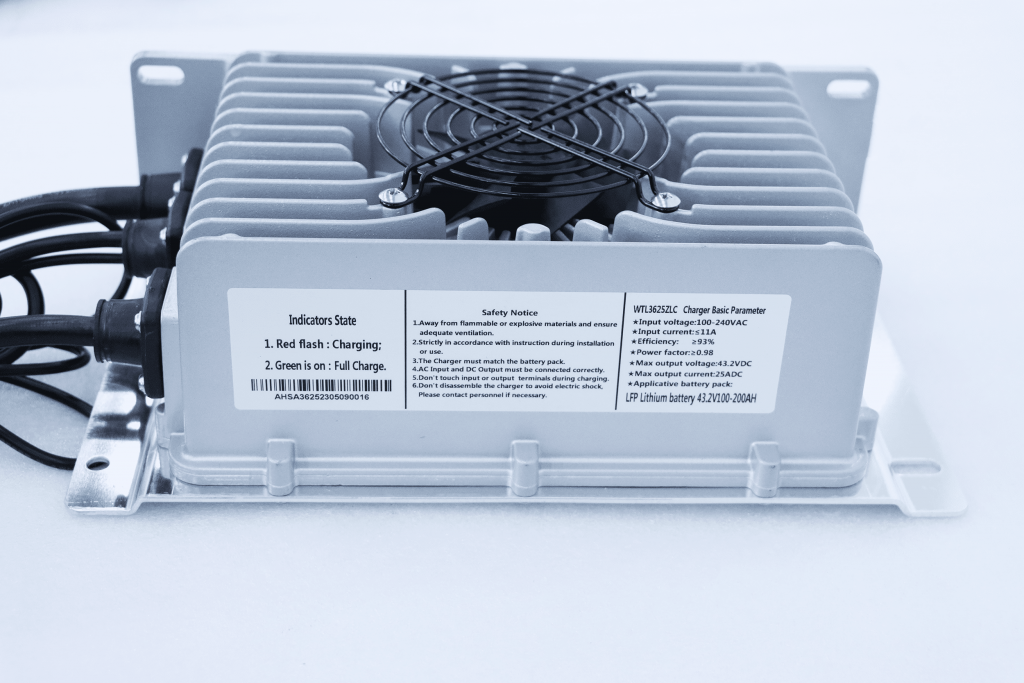
Make sure your charger is compatible with your battery type and has adequate safety features to prevent overcharging.
Charging time for a golf cart battery is usually determined by its type and charger specifications. Charging time for a 48-volt golf cart depends on the capacity of the charger and the discharge of the battery. For new or well-maintained batteries with less than 30% charge, it may take 1 to 3 hours.
A standard charger can take up to 10 hours to charge a deeply discharged battery, especially an older battery. A 36-volt golf cart typically takes 8 to 10 hours to fully charge, depending on the charger used and battery condition.